
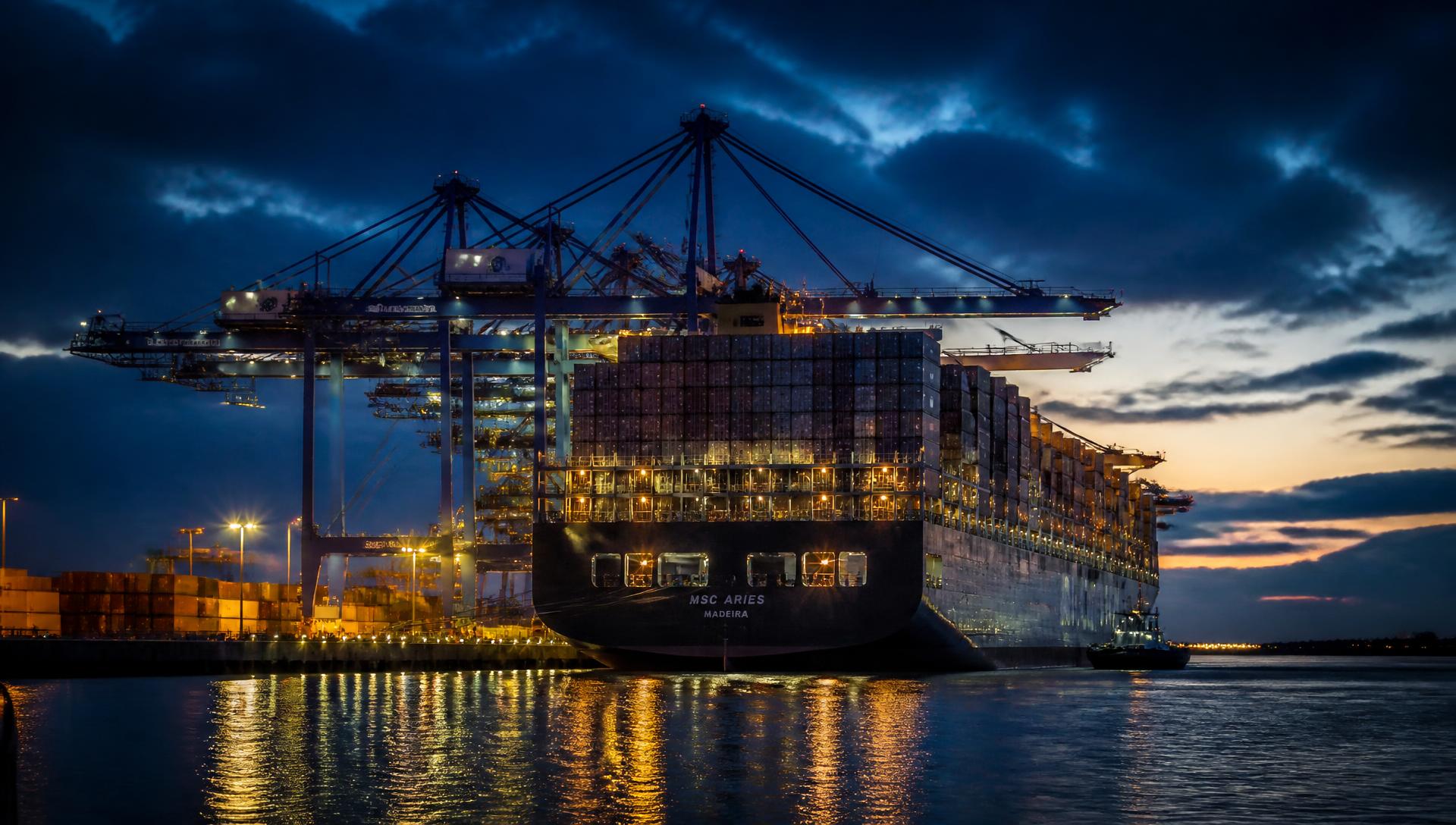
Not everything belongs in a box. Self-propelled units, tracked machinery, boats on cradles and abnormal project pieces move better on RoRo decks or as breakbulk on a conventional vessel, and Car Shipping Direct books both every week. Our ShipCars UK service helps private and trade customers ship cars from UK collection points through RoRo terminals at Tilbury, Southampton, Immingham and Sheerness.
Pricing guide
Container Shipping Pricing Guide
20ft, 40ft, high cube and LCL groupage from UK ports
| 20ft standard container (FCL)Port to port | from £1,450 |
| 40ft standard container (FCL)Port to port | from £2,050 |
| 40ft high cube container76 m³ capacity | from £2,190 |
| LCL groupageMinimum 2 m³ | from £95 per m³ |
| Loading, lashing & bracing | from £180 per container |
| UK export customs entry | £45 per entry |
| UK haulage to portAny UK postcode | from £280 |
Indicative rates only, excluding VAT where applicable. Final pricing depends on dimensions, weight, sailing schedule and destination charges.
RoRo sailings are frequent, competitively priced and quick to book. The cargo is driven or towed aboard on a mafi trailer, secured to a fixed deck and discharged the same way at the destination terminal. Breakbulk suits pieces that must be lifted, transformers, steel structures, prefabricated units and industrial plant, and is planned around the vessel's crane capacity and the terminal's lifting gear.
Sea freight remains the backbone of UK export for one simple reason: cost per tonne or per cubic metre beats every other mode by a wide margin once cargo is above a few hundred kilos. It suits planned shipments where a few days either way in the schedule is manageable, which describes the great majority of vehicle, machinery and commercial freight moving out of the country.
We quote every enquiry against the mode that actually fits the cargo rather than defaulting to whichever service is easiest for us to sell. If a unit is genuinely too large, too heavy or too awkward for a standard RoRo lane or box container, we will say so early and price a breakbulk or heavy-lift alternative instead of forcing the wrong solution through the booking system.
Cargo we move by RoRo and breakbulk
- Cars, vans, trucks and buses
- Tracked and wheeled construction plant
- Agricultural machinery and combines
- Boats, yachts and marine equipment
- Static and non-running units on mafi trailers
- Steel, pipes and structural sections
- Transformers and heavy industrial units
- Project cargo requiring lift studies
Services included in every booking
A RoRo or breakbulk booking is more than a slot on a vessel. Every quotation from Car Shipping Direct covers the full chain from your gate to the discharge port so nothing is left for you to arrange separately.
- Collection or delivery to the loading berth by our own or vetted subcontracted haulage
- Booking and confirmation of vessel, voyage number and sailing date
- Export customs declaration and, where required, DVLA notification
- Lashing, securing and, for breakbulk, lift planning and rigging
- All-risk marine insurance quotation on request
- Tracking updates at collection, gate-in, sailing and arrival
How Your Shipment Moves
Quote & booking
Rates, sailing or flight options confirmed in writing.
UK collection
Nationwide collection or delivery into our Tilbury depot.
Loading & packing
Lashing, crating, palletising and photographic record.
Customs & export
Export entry, NES clearance and documentation released.
Transit & delivery
Tracking updates until the cargo lands with your consignee.
Equipment we use
The right piece of equipment is chosen for the cargo, not the other way round, and we hold access to the full range needed for RoRo and breakbulk work.
RoRo trailers and mafis
Self-propelled units are driven directly onto the vessel; non-runners and static plant travel on mafi trailers, which are flat steel platforms towed aboard by a terminal tug and lashed to the deck for the voyage.
Lifting and rigging for breakbulk
Pieces that must be craned rather than driven are rigged with certified slings, spreader beams or lifting frames matched to the centre of gravity, and lifted using either the vessel's own gear or shore-side cranes at the terminal.
Flat racks and open tops
Where a piece is oversized in only one dimension, a flat rack or open-top container is often more economical than full breakbulk, combining container-line frequency with the flexibility of an open deck.
UK ports we load from
Our RoRo and breakbulk bookings are concentrated at the terminals with the widest sailing choice and the equipment to handle awkward cargo.
- Tilbury, our home port, minutes from the East Tilbury compound, with Mediterranean, African and Gulf rotations
- Southampton, the UK's largest RoRo terminal, serving West Africa, the Middle East and the Caribbean
- Immingham, the principal gateway for Scandinavia and the Baltic
- Sheerness, shortsea RoRo and container capacity for European crossings
- Bristol (Portbury), selected North and West African rotations
Transit times
Sailing time depends on the vessel's rotation and whether it calls direct or via a transhipment hub. As a guide from UK ports: Western Europe 3–7 days, West Africa 14–24 days, East and Southern Africa 21–32 days, the Middle East and Gulf 10–20 days, the Caribbean and North America 12–22 days, and Australia and New Zealand 35–48 days. Breakbulk vessels sail less frequently than container or RoRo lines, so we build the vessel's actual rotation into your quotation rather than quoting a generic average.
Planning an out-of-gauge move
Give us the dimensions, weight and centre of gravity and we will produce a routing plan covering UK abnormal load haulage, police notifications where required, port access, lifting arrangements and the stowage position on board. Where the piece exceeds the terminal's capability we will price a heavy-lift vessel or a barge feeder instead.
- Full dimensions, weight and centre of gravity survey
- Abnormal load route survey and police notification where required
- Confirmation of terminal crane or ramp capacity before booking
- Lift study and rigging plan for pieces requiring a crane
- Alternative heavy-lift or barge feeder quotation where standard equipment is insufficient
Documentation and customs
Breakbulk and RoRo shipments are covered by the same export formalities as containerised cargo: customs entry, bill of lading, packing list and, where the destination requires it, pre-shipment inspection. We prepare and check every document in-house rather than outsourcing the paperwork after the cargo has already gated in.
Documents we typically prepare
The exact list varies by cargo and destination, but most RoRo and breakbulk shipments require the following as a minimum.
- HMRC export declaration and Movement Reference Number
- Bill of lading naming the consignee
- Packing list and, for vehicles, the V5C or equivalent title document
- Certificate of origin where the destination trade agreement requires one
- Pre-shipment inspection booking for markets that mandate it
Packing, securing and loading
Every piece passing through our East Tilbury yard is inspected, photographed and matched against the booking before it goes anywhere near a vessel. RoRo units are lashed with four-point webbing to the carrier's specification; breakbulk pieces are chocked, shored and secured with steel lashing to the vessel's securing manual, and loose ancillary items such as buckets, spares or tools are crated separately rather than left rattling loose on the deck.
Insurance
Carrier liability under the applicable convention is limited and rarely reflects the true value of a vehicle, machine or vessel. All-risk marine insurance is available at 1.5% of the declared CIF value and is strongly recommended on high-value plant, covering total loss, damage and general average contribution from collection to discharge.
What drives your price
RoRo and breakbulk pricing is built from several variables, and we set out each one on your quotation rather than quoting a single opaque figure.
- Cargo dimensions and weight, lane metres for RoRo, freight tonnes for breakbulk
- Whether the unit is self-propelled or requires towing or lifting
- Loading port and destination port combination and sailing frequency
- Lifting or rigging complexity for breakbulk pieces
- Declared value for insurance purposes
- Seasonal vessel demand and space availability
Trade and project clients
Plant hire companies, agricultural dealers, marine brokers and project cargo contractors move regularly with us under standing arrangements that cover recurring lanes, pre-agreed documentation packs and a single coordinator who understands the equipment being shipped rather than treating each booking as a one-off enquiry.
Frequently asked questions
Answers to the questions we are asked most often about RoRo and breakbulk shipping.
Does my machine need to be running to travel RoRo?
It needs to be capable of being driven or towed onto the vessel. A machine that starts but cannot move under its own power can usually still travel on a mafi trailer.
How is breakbulk freight priced?
Breakbulk is typically rated on freight tonnes, the greater of weight or volumetric measurement, plus a lift or handling charge where a crane is required at either end.
Can I send spares or accessories with a RoRo unit?
No loose items may travel inside a RoRo unit. Spares and accessories need to be crated and shipped separately, either as breakbulk or in a container.
Why ship with Car Shipping Direct
Car Shipping Direct LTD trades as Car Shipping Direct from our own compound at East Tilbury, so a RoRo or breakbulk shipment is surveyed, prepared, loaded and documented on one site by people who understand awkward cargo, rather than passed between agents who see it only on a manifest.