
Freight pricing has a reputation for being opaque, and it does not need to be. Ocean and air rates move with fuel, currency and the balance of trade on a lane, so nobody can publish a fixed price list that stays true for a year. What we can do is show you the shape of a quotation, which charges exist, who levies them, and roughly what they cost , so nothing on your invoice is a surprise.
How to compare worldwide shipping rates
Use the finder above to compare vehicle, container and air freight costs for any of our198 destinations. The same shipment changes price with size, weight, method, route and available carrier space. Nearer markets are usually lower, while long-haul and landlocked destinations include more handling or onward transport.
What is normally included
A standard port-to-port quotation includes the ocean or air freight itself, the UK terminal handling charge, the export customs entry and the bill of lading or air waybill release. Add-ons priced separately are UK collection, loading and bracing at our facility, marine insurance, out-of-gauge surcharges and any inspection or fumigation certificate your destination demands.
What is charged at the destination
Destination terminal handling, import customs clearance, duty and local taxes, port storage after free time, quarantine inspection and inland delivery are payable in the destination country and are almost never included in a UK freight price. Duty in particular varies enormously, some markets charge under 10% of the CIF value, others more than 80% on a used car. We will give you an indication and put you in touch with a licensed local agent.
Five things that change your price
- Volume and weight, sea freight is priced on cubic metres, air on the greater of actual and volumetric weight.
- Method, RoRo is cheaper than a container for a running car; groupage is cheaper than a full box under 12 cbm.
- Season, space in the summer removals peak and before Chinese New Year costs more.
- Routing, a direct sailing costs more than a transhipment but saves a week or more.
- Door versus port, collection and destination delivery are the two lines most commonly left out of a cheap-looking quote.
Rates by destination
- Car shipping rates to Australia · containers · air freight
- Car shipping rates to Nigeria · containers · air freight
- Car shipping rates to United States · containers · air freight
- Car shipping rates to South Africa · containers · air freight
- Car shipping rates to India · containers · air freight
- Car shipping rates to Canada · containers · air freight
- Car shipping rates to Ghana · containers · air freight
- Car shipping rates to Jamaica · containers · air freight
- Car shipping rates to Kenya · containers · air freight
- Car shipping rates to New Zealand · containers · air freight
- Car shipping rates to Cyprus · containers · air freight
- Car shipping rates to United Arab Emirates · containers · air freight
Surcharges you may see on a freight invoice
BAF / bunker adjustment tracks fuel; CAF covers currency movement; THC is terminal handling at each end; ISPS is a fixed security levy; war risk applies on certain lanes; congestion is levied when a port is running behind. On air freight, fuel and security surcharges are quoted per kilo of chargeable weight. We show each of these as its own line so you can see exactly what moved when a rate changes.
How we price a vehicle
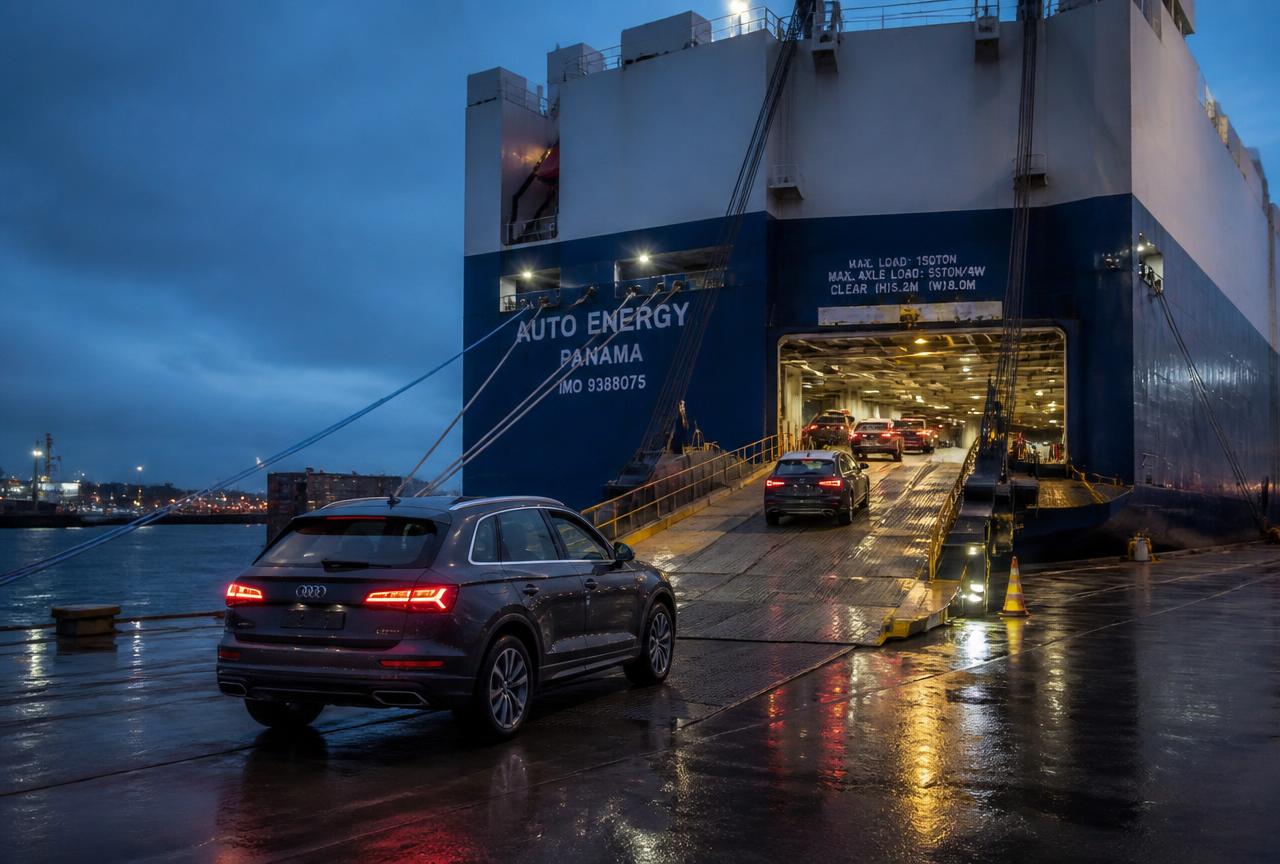
A running car on RoRo is priced on lane metres, length multiplied by width, plus a height step for anything above roughly 1.8 metres. A vehicle in a container is priced on the box, so two or three cars sharing a 40ft high cube can work out cheaper per unit than RoRo. Non-runners attract a winching or forklift charge at both ends.
How we price sea and air cargo
LCL groupage is charged on the greater of one cubic metre or one tonne, with a minimum of one revenue unit. FCL is a flat rate for the box regardless of how well you fill it, which is why 12 cbm is roughly the break-even point against groupage. Air freight uses volumetric weight at 1 cbm = 167 kg, so light bulky cargo is priced on space, not scales.
Payment terms
Private customers pay before departure by bank transfer or card. Trade accounts with an established shipping history can be set up on 14 or 30 day terms subject to references. Freight, insurance and UK-side charges are invoiced together in sterling; destination charges are billed locally by our agent in the local currency.
Rate validity
A written quotation from our desk is valid for 14 days and is held for the sailing named on it. Beyond that we re-check the carrier tariff, sometimes it has fallen. The indicative figures published on this site are guide prices for comparison, not offers, and every firm price is confirmed in writing before you commit.