
Trucks are not cars with more metal. They are tall, heavy, often non-runners, and the way they are measured decides the freight cost. We ship rigid trucks, tractor units, tippers, mixers, curtain-siders, refuse vehicles, coaches, minibuses, fire appliances, cranes, excavators, dozers and agricultural machinery from the UK to ports on every continent, and we price each unit on its true lane metres rather than a generic vehicle rate.
Pricing guide
Vehicle Shipping Pricing Guide
RoRo and containerised car shipping from Tilbury, Southampton, Sheerness and Liverpool
| Saloon / hatchback carRoRo, UK port to destination port | from £695 |
| 4x4, SUV & pick-upPriced on cubic measurement | from £890 |
| Van, minibus & motorhomeHeight and length surcharges apply | from £1,150 |
| Motorbike (crated or shared container) | from £395 |
| Truck, tractor & plant machineryRoRo or flat rack | from £1,450 |
| Two cars in a shared 40ft containerLoaded and braced at Tilbury | from £1,950 |
| Marine insurance | 1.5% of declared value |
Indicative rates only, excluding VAT where applicable. Final pricing depends on dimensions, weight, sailing schedule and destination charges.
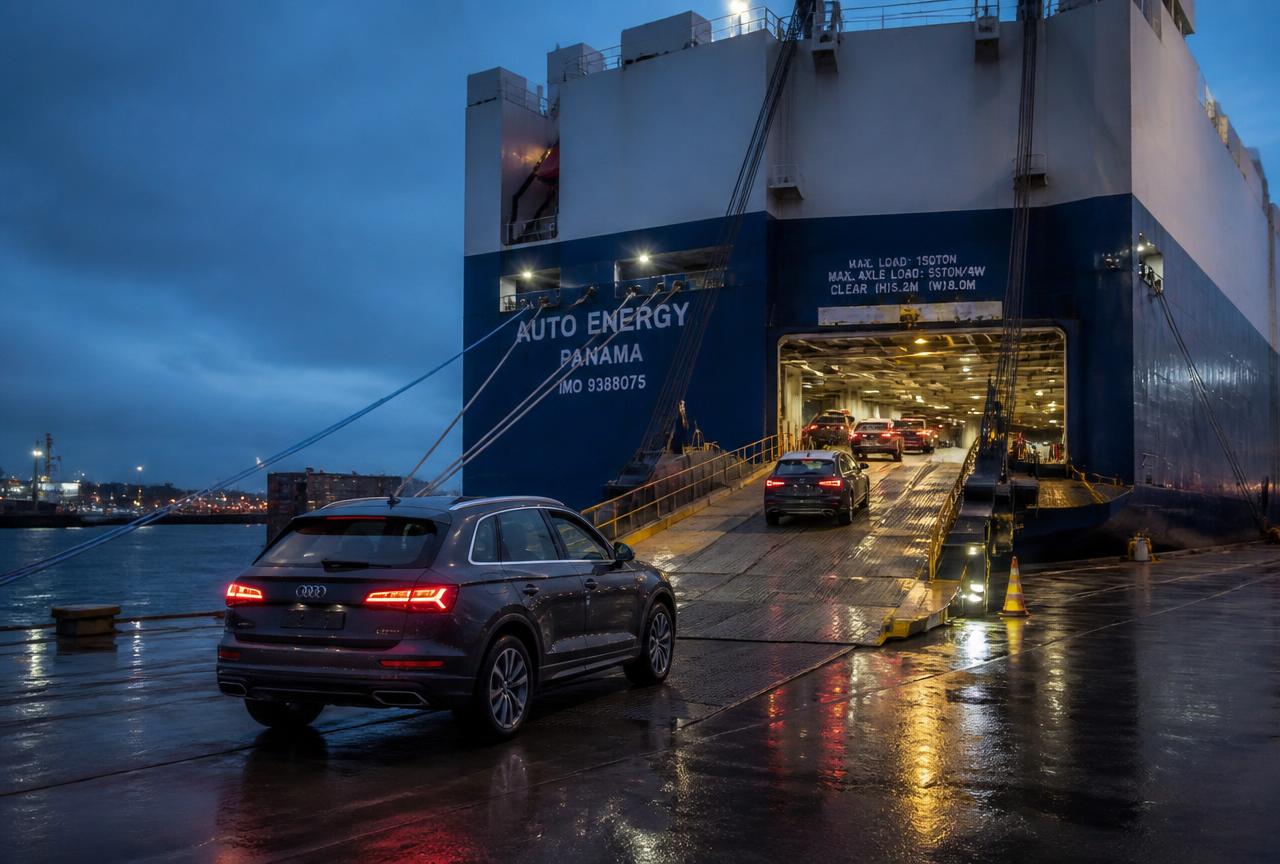
For running units, roll-on roll-off remains the cheapest and fastest route. The vehicle is driven up the ramp and lashed on a fixed deck, so there is no crating and no lifting. Non-runners, dismantled units and tracked machines travel on a mafi trailer, a flat rack or as breakbulk, lifted on by the terminal crane with a lift plan agreed in advance.
Ahead of shipping we will confirm the exact overall length, width and height in running order, the kerb weight, whether the unit steers and brakes, and whether any part can be removed to reduce the cube, a tipping body, a crane boom, a snow plough or a set of duals will often pay for themselves in saved freight. Anything above 2.4 metres high or 2.5 metres wide is quoted individually.
UK abnormal load haulage, police notifications, escort vehicles and low-loader movements to the berth are all arranged by our own operations team. On arrival we can appoint an agent to clear the unit, register it locally and deliver it to site, or hand it over at the ramp to your own representative.
Heavy units we ship
- Tractor units, rigids and drawbar outfits
- Tippers, mixers, tankers and refuse vehicles
- Coaches, buses, minibuses and ambulances
- Fire appliances and municipal vehicles
- Mobile and lorry-mounted cranes
- Excavators, dozers, loaders and rollers
- Tractors, combines, sprayers and implements
- Trailers, low-loaders and static bodies
UK ports and loading options
Heavy units load from a small number of terminals with the ramp capacity, crane provision and hardstanding a truck or plant machine needs, and we route each booking to whichever gives the earliest sailing for the destination.
- Tilbury and London Gateway, our home terminals for RoRo and breakbulk plant
- Southampton, high-frequency RoRo sailings to Africa and the Middle East
- Immingham, Scandinavian and Baltic RoRo capacity for northern-registered fleets
- Sheerness, additional RoRo and breakbulk capacity for shortsea Mediterranean routes
How Your Shipment Moves
Quote & booking
Rates, sailing or flight options confirmed in writing.
UK collection
Nationwide collection or delivery into our Tilbury depot.
Loading & packing
Lashing, crating, palletising and photographic record.
Customs & export
Export entry, NES clearance and documentation released.
Transit & delivery
Tracking updates until the cargo lands with your consignee.
RoRo, mafi trailer and breakbulk explained
The right loading method depends entirely on whether the unit can move under its own power.
RoRo (self-propelled)
The unit is driven aboard and lashed to the deck. This is the cheapest and quickest method, available to any running truck, bus or plant item with working brakes and steering.
Mafi trailer
Non-runners and tracked machines are winched or towed onto a flat mafi trailer, which is then driven aboard by a terminal tug, the standard method for excavators, dozers and static bodies.
Breakbulk / lift-on lift-off
Oversized or exceptionally heavy pieces are lifted aboard a conventional vessel by ship's crane or shore crane, planned around the exact weight, dimensions and lifting points of the unit.
Transit times
Indicative sailing times from our UK loading ports: Western Europe 3–7 days, West Africa 14–24 days, the Middle East and Gulf 12–20 days, East and Southern Africa 22–32 days, and South America 20–30 days. Breakbulk sailings run less frequently than RoRo and are typically booked three to six weeks ahead.
Preparing a truck for shipment
Fuel should be at or below a quarter of a tank, batteries connected and charged, hydraulics retracted, loose tools removed and any tarpaulins secured. Terminals reject units that leak oil or hydraulic fluid, so pressure-wash the underside and rectify drips before delivery. Where a machine carries soil or plant matter, a steam clean and, for some destinations, a fumigation certificate will be required before the unit is accepted at the port.
- Fuel at or below a quarter tank
- Battery isolators accessible and clearly labelled
- Hydraulic arms, booms and tipping bodies secured or removed
- Underside pressure-washed to remove oil, grease and soil
- Loose tools, fuel cans and chemicals removed before collection
Documentation and export evidence
We prepare the export customs entry, surrender the V5C to DVLA where the vehicle is permanently exported, obtain the bill of lading and provide proof of export for your VAT records. Many markets also require a pre-shipment inspection, roadworthiness certificate or emissions declaration; our desk checks your destination's current rules and tells you what to obtain before the sailing rather than after it.
Costs and what affects price
Heavy units are priced predominantly on lane metres, the deck length occupied, rather than weight alone, so overall length and width matter more than tonnage for RoRo bookings.
- Overall length, width and height in running order
- Kerb weight and axle loading for terminal handling
- Whether the unit is a runner (RoRo) or requires mafi/breakbulk handling
- UK abnormal load haulage and police escort requirements
- Destination port crane or ramp capability
Insurance for high-value plant
All-risk marine cover is arranged at 1.5% of the declared value and includes loading, sea passage, discharge and general average. For self-propelled plant we also recommend a documented condition survey with photographs at our yard, which we complete free of charge and issue with the shipping file the same day.
Fleet operators and plant hire trade
Haulage companies, plant hire firms and machinery exporters moving multiple units can agree a standing tariff by weight or lane-metre band, book a rolling programme of sailings, and receive consolidated invoicing across a full fleet disposal or export contract.
Frequently asked questions
Common questions from operators shipping trucks and heavy plant.
Can an articulated unit ship with its trailer attached?
Usually not on RoRo, tractor and trailer are normally booked and lashed as separate units, though we can arrange combined bookings on the same sailing.
Do you arrange abnormal load escorts in the UK?
Yes, our transport desk arranges route surveys, police notifications where required and escort vehicles for any movement exceeding standard road limits.
What if my machine cannot be steam cleaned before collection?
We can clean at our East Tilbury yard before the unit goes to the terminal, which avoids a wasted trip if the port rejects a dirty machine.
Why choose Car Shipping Direct
We plan lift studies, abnormal load haulage and export paperwork in-house rather than outsourcing each stage, so a heavy unit moves on one coordinated file from your yard to the discharge port.